


Madina Ziyarat by Car: A Complete Guide to Visiting the Holy Sites of Madinah
Visiting Madinah is a special experience for every Muslim. The peaceful atmosphere, beautiful Masjid-e-Nabawi, and deep Islamic history make this blessed city a place close to every believer’s heart. Whether you’re visiting for Umrah or staying in Saudi Arabia, exploring the holy places of Madinah can make your journey even more meaningful.
For many visitors, Madina ziyarat by car is a convenient way to explore important Islamic landmarks. It allows you to travel between different locations comfortably, spend time at each site, and enjoy a more flexible journey with your family or fellow pilgrims.
Madinah has many historic places connected to the life of Prophet Muhammad (PBUH), his companions, and the early days of Islam. Some locations are close to each other, while others require a short drive. Having a suitable vehicle and a well-planned route can make your visit easier and more organized.
If you’re planning your visit, this guide will help you understand the major ziyarat locations, what to expect, how to prepare, and how to make the most of your time in the holy city.
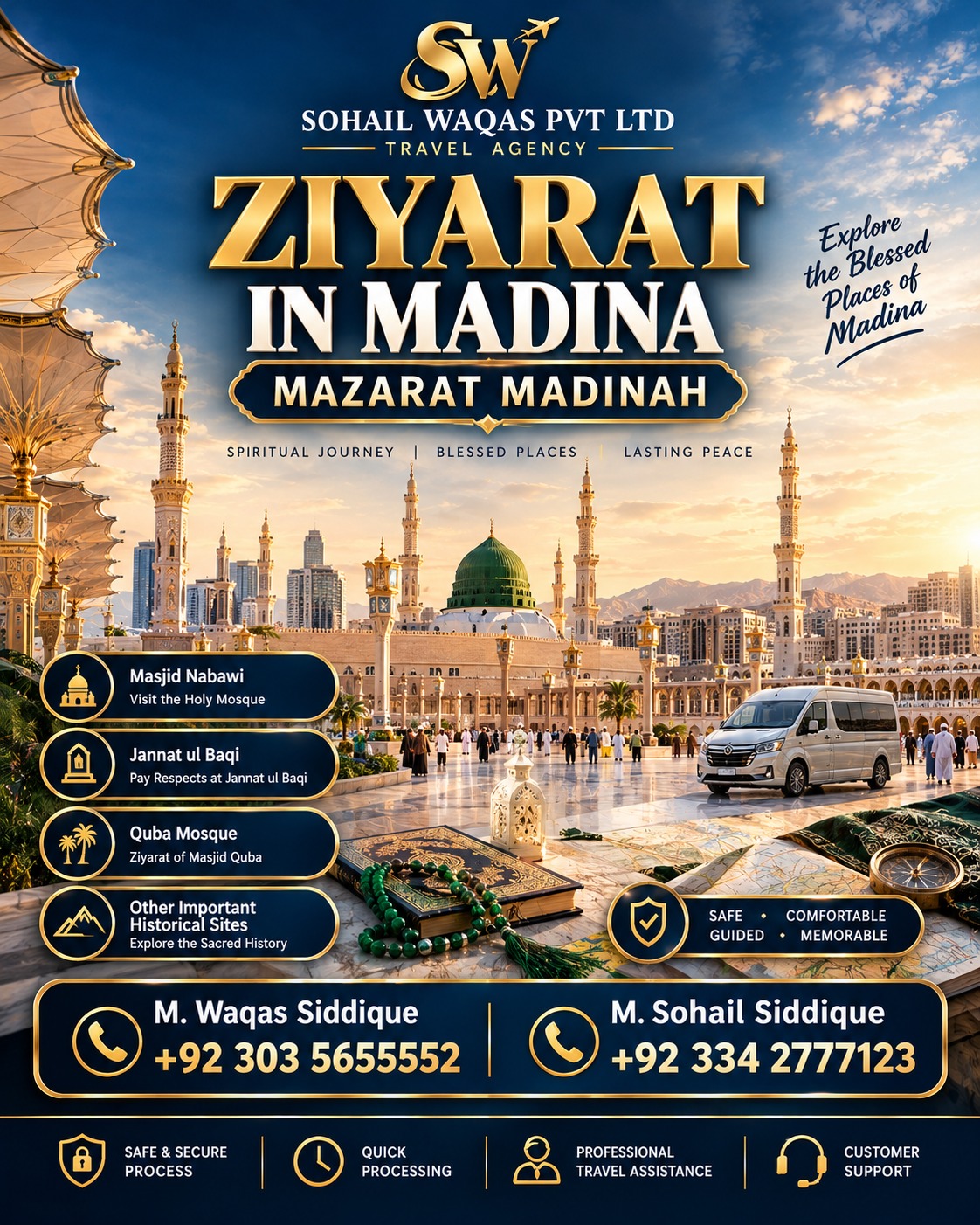
What Is Madina Ziyarat?
Madina ziyarat refers to visiting important Islamic and historical locations in Madinah, Saudi Arabia. These places remind Muslims of the struggles, sacrifices, teachings, and history of early Islam.
For pilgrims, visiting these locations is also an opportunity to reflect, make dua, learn about Islamic history, and appreciate the sacrifices made by Prophet Muhammad (PBUH) and his companions.

Some of the most popular places include:
-
Masjid-e-Nabawi
-
Masjid Quba
-
Masjid Qiblatain
-
Mount Uhud
-
Jannat-ul-Baqi
-
The Seven Mosques
-
Masjid Ghamama
-
Masjid Abu Bakr Siddique
Each place has its own historical importance. Visiting them with knowledge and respect can make your experience more rewarding.
Why Choose Madina Ziyarat by Car?
Madinah attracts millions of visitors every year. During busy seasons, especially Ramadan, school holidays, and the Hajj and Umrah periods, public transportation and roads around popular religious sites can become crowded.
Choosing Madina ziyarat by car gives you greater control over your travel arrangements.
Here are some reasons why many visitors prefer this option.
1. Comfortable Travel Between Ziyarat Locations
Visiting several historical sites in one day can involve a lot of walking. This may be tiring, particularly for elderly visitors, children, and people travelling with family members.
A car makes it easier to move between locations without unnecessary physical effort.
You can travel from your hotel to Masjid Quba, continue towards Mount Uhud, and visit other historical locations according to your planned route.
2. Flexible Travel Schedule
One of the biggest advantages of travelling by car is flexibility.
You can plan your visit according to your daily routine, prayer times, and personal preferences. If you want to spend more time at a particular mosque, you can adjust your schedule accordingly.
This is especially useful for families and groups who prefer a relaxed journey.
3. Suitable for Families and Groups
Travelling with children or elderly family members requires extra planning. You may need frequent breaks, convenient drop-off points, and enough time to move between destinations.
A private vehicle can make these arrangements easier.
It also allows family members to travel together instead of arranging separate transportation.
4. Less Physical Tiredness
Walking is part of many pilgrimage experiences, but travelling between distant locations can become exhausting.
A car reduces the amount of walking needed between sites. You can save your energy for prayers, reflection, and other religious activities.
5. Better Time Management
When you have limited time in Madinah, planning your route becomes very important.
A well-organized car journey can help you visit several significant locations without spending unnecessary time arranging transportation between them.
However, actual travel times depend on traffic, road conditions, prayer times, and visitor numbers.
Top Places to Visit During Madina Ziyarat
Madinah has several important Islamic landmarks. If you’re planning a sightseeing and religious history tour, the following places are worth including in your itinerary.
1. Masjid-e-Nabawi – The Heart of Madinah
Masjid-e-Nabawi, Madinah
Masjid-e-Nabawi is one of the most sacred mosques in Islam. It was established by Prophet Muhammad (PBUH) after his migration from Makkah to Madinah.
The mosque holds a special place in the hearts of Muslims around the world. Its beautiful architecture, peaceful atmosphere, and spiritual importance make it the central destination for visitors.
The mosque is also home to the blessed chamber where Prophet Muhammad (PBUH) is buried.
Things to know before visiting:
-
Dress modestly and follow mosque regulations.
-
Maintain silence and respect other worshippers.
-
Follow the official arrangements for visiting the Rawdah.
-
Avoid blocking entrances and walking routes.
-
Give yourself enough time for prayers.
For many pilgrims, spending time at Masjid-e-Nabawi is the most memorable part of their Madinah visit.
2. Masjid Quba – The First Mosque in Islam
Masjid Quba
Masjid Quba is one of the most historically significant mosques in Madinah. It is widely recognized as the first mosque established in Islam.
Prophet Muhammad (PBUH) visited this mosque during his time in Quba after arriving in the Madinah region.
The mosque is also associated with the special virtue of performing purification at home and then offering two rak’ahs of prayer there.
Its peaceful surroundings and impressive architecture attract visitors throughout the year.
Why visit Masjid Quba?
-
Learn about the early history of Islam.
-
Appreciate the mosque’s historical significance.
-
Offer voluntary prayers.
-
Reflect on the migration of Prophet Muhammad (PBUH).
A car makes the journey to Masjid Quba convenient, especially if you’re visiting several other locations on the same day.
3. Mount Uhud – Remembering the Battle of Uhud
Mount Uhud
Mount Uhud is one of the most recognizable historical landmarks in Madinah.
It is famous because of the Battle of Uhud, which took place in 3 AH between the Muslims and the Quraysh of Makkah.
The battle is an important part of Islamic history. It reminds Muslims of courage, obedience, patience, sacrifice, and the importance of following the guidance of the Prophet (PBUH).
The area also includes the location associated with the archers who were positioned on a nearby hill during the battle.
Visitors often stop here to learn about the events and remember the companions who sacrificed their lives.
What you can do at Mount Uhud:
-
Observe the historic mountain.
-
Learn about the Battle of Uhud.
-
Visit the nearby martyrs’ cemetery respectfully.
-
Reflect on the lessons of patience and sacrifice.
Please remember that the area is a historical and religious site. Follow local instructions and avoid climbing restricted or unsafe areas.
4. Jannat-ul-Baqi – The Historic Muslim Cemetery
Jannat-ul-Baqi
Jannat-ul-Baqi is a historic cemetery located near Masjid-e-Nabawi.
Many companions of Prophet Muhammad (PBUH), members of his family, and other respected early Muslims are buried here.
It has great historical importance and reminds visitors of the temporary nature of worldly life.
Muslims visiting the cemetery often make dua for those buried there and remember the importance of preparing for the Hereafter.
Visitor guidance:
-
Follow the official visiting arrangements.
-
Respect cemetery boundaries.
-
Avoid disturbing others.
-
Make appropriate duas.
-
Maintain a calm and respectful attitude.
Access arrangements may vary, so check local instructions before planning your visit.
5. Masjid Qiblatain – The Mosque of Two Qiblas
Masjid Qiblatain
Masjid Qiblatain is another important historical mosque in Madinah.
The mosque is associated with the change of the Muslim prayer direction from Jerusalem towards the Holy Kaaba in Makkah.
This event was a major moment in Islamic history and is mentioned in the Holy Quran in Surah Al-Baqarah.
The name Qiblatain means two qiblas, reflecting the mosque’s historical connection with this event.
When visiting, take time to understand the story behind the change of direction and its importance for Muslims.
6. The Seven Mosques – A Historic Area of Madinah
The Seven Mosques area
The Seven Mosques, commonly known as Sab’a Masajid, are a group of small historic mosques in Madinah.
They are located near the area associated with the Battle of the Trench, also known as Ghazwat al-Khandaq.
This battle was a significant event during the early Muslim period. Muslims defended Madinah against a large attacking force by using a trench as a defensive strategy.
The area is popular among visitors who want to explore the history of the Prophet’s time in Madinah.
The historic site is worth including in your route if you’re interested in learning more about the early Muslim community.
7. Masjid Ghamama – The Mosque of Clouds
Masjid Ghamama
Masjid Ghamama is a historic mosque located close to Masjid-e-Nabawi.
It is traditionally associated with places where Prophet Muhammad (PBUH) performed Eid prayers and offered the prayer for rain.
The name Ghamama is associated with clouds.
Its location makes it a convenient stop for visitors exploring the historic surroundings of the Prophet’s Mosque.
The mosque also provides an opportunity to appreciate the architecture and religious heritage of old Madinah.
8. Masjid Abu Bakr Siddique (RA)
Masjid Abu Bakr Siddique
This historic mosque is associated with Abu Bakr Siddique (RA), the closest companion of Prophet Muhammad (PBUH) and the first Caliph of Islam.
It is situated in the historic central area of Madinah.
The mosque is an interesting stop for visitors who want to understand the religious and historical heritage surrounding Masjid-e-Nabawi.
Its connection with one of the most respected companions makes it a meaningful location for many Muslims.
Madina Ziyarat by Car: Suggested Travel Itinerary
Planning your route before leaving your hotel can save time and make your visit more enjoyable.
A good itinerary should consider the locations of the sites, prayer times, traffic, and the physical needs of your group.
Here is a practical example of how you can organize your visit.
Morning Ziyarat Schedule
Start your day after having breakfast and preparing for the journey.
Suggested locations:
-
Masjid Quba
-
Masjid Qiblatain
-
The Seven Mosques
-
Mount Uhud
-
Jannat-ul-Baqi, subject to visiting arrangements
You can adjust the order depending on road conditions and opening or access arrangements.
Afternoon Schedule
If you prefer a shorter outing, you can visit some nearby historical locations around the central area.
Suggested places include:
-
Masjid Ghamama
-
Masjid Abu Bakr Siddique
-
Historic surroundings of Masjid-e-Nabawi
Remember that some locations are within walking distance of one another. You may not need a car for every stop.
Example Ziyarat Planning Table
|
Location |
Historical importance |
Suggested activity |
|---|---|---|
|
Masjid Quba |
First mosque in Islam |
Prayer and reflection |
|
Mount Uhud |
Battle of Uhud |
Historical visit |
|
Masjid Qiblatain |
Change of Qibla |
Learn Islamic history |
|
Seven Mosques |
Battle of the Trench area |
Historical exploration |
|
Jannat-ul-Baqi |
Historic cemetery |
Dua and reflection |
|
Masjid Ghamama |
Historic prayer location |
Explore the mosque |
|
Masjid Abu Bakr |
Associated with the first Caliph |
Historical visit |
This schedule is a guide rather than a fixed timetable. You can select the locations according to your available time and personal interests.
How to Prepare for Madina Ziyarat by Car
Good preparation can make your journey smoother, particularly if you’re visiting Madinah for the first time.
Here are some practical steps to follow.
Step 1: Decide Which Places You Want to Visit
Before starting your journey, make a list of the places you want to explore.
If you have limited time, focus on the major historical locations first.
Avoid trying to visit every location in a hurry. A relaxed visit is often more meaningful than rushing through multiple sites.
Step 2: Confirm Your Transportation
Choose transportation that suits your group size and travel needs.
Consider:
-
Number of passengers.
-
Space for luggage, if required.
-
Comfort for elderly passengers.
-
Air conditioning.
-
Convenient entry and exit.
-
Driver familiarity with Madinah.
A suitable vehicle can make a noticeable difference to your travel experience.
Step 3: Plan Around Prayer Times
Prayer times are an important part of daily life in Madinah.
Plan your journey so that you can offer your prayers comfortably without feeling rushed.
You may also want to avoid scheduling too many stops immediately before or after busy prayer periods.
Step 4: Keep Essential Items With You
Before leaving your hotel, prepare a small travel bag.
Useful items include:
-
Drinking water.
-
Mobile phone.
-
Fully charged power bank.
-
Comfortable footwear.
-
Identification documents.
-
Prayer items, if needed.
-
Any essential personal medication.
These small preparations can prevent unnecessary interruptions.
Step 5: Check the Route
Use a reliable navigation application to check the distance and traffic conditions.
Some locations may have restricted vehicle access or designated parking areas.
Checking the route before departure can help you avoid confusion and unnecessary delays.
Step 6: Follow Local Rules
Madinah welcomes visitors from many countries and backgrounds.
Respect local regulations, mosque guidelines, road signs, parking instructions, and visitor arrangements.
Some religious locations have specific access rules. Always follow the directions provided by the authorities.
Who Should Choose Private Car Ziyarat?
Travelling by car can be especially helpful for visitors who need a more flexible experience.
Families With Children
Children may become tired during long walking journeys.
A car gives families a convenient place to rest between locations and makes it easier to organize the day.
Elderly Pilgrims
Older visitors may find it difficult to walk long distances, especially in hot weather.
Travelling by car can reduce physical strain and help them visit important locations more comfortably.
Groups of Friends
Groups often prefer to travel together.
A suitable vehicle allows everyone to follow the same schedule and enjoy the journey as a group.
First-Time Visitors
If you’re visiting Madinah for the first time, you may not be familiar with the locations and roads.
Having an organized transportation arrangement can make your first ziyarat experience easier.
Umrah Pilgrims
Many Muslims visit Madinah before or after performing Umrah in Makkah.
If you have limited time in the city, a planned car journey can help you explore its major historical sites more efficiently.
Private Car vs Public Transportation for Madina Ziyarat
Both private cars and public transportation can help you explore Madinah. The right choice depends on your travel preferences and group requirements.
|
Feature |
Private Car |
Public Transportation |
|---|---|---|
|
Flexibility |
More flexible |
Depends on routes and schedules |
|
Family travel |
Convenient for groups |
May require extra planning |
|
Personal space |
Greater privacy |
Shared travel |
|
Route planning |
Can be customized |
Follows available routes |
|
Elderly passengers |
Easier door-to-door arrangements |
May involve additional walking |
|
Multiple destinations |
Convenient for planned stops |
Transfers may be required |
Advantages of Private Car Travel
-
Greater flexibility.
-
Convenient for families.
-
Easier coordination between locations.
-
More personal space.
-
Less walking between distant sites.
Advantages of Public Transportation
-
Useful for independent travellers.
-
Access to established transport routes.
-
Suitable for visitors comfortable with shared transport.
-
May be convenient for journeys between major areas.
For visitors who value flexibility and convenience, private car travel can be a practical choice.
Common Mistakes to Avoid During Madina Ziyarat
Even a simple journey can become stressful if you don’t plan properly.
Here are some common mistakes you should avoid.
1. Visiting Too Many Places in One Day
Some visitors try to cover every historical location in a short period.
This can make the experience tiring and leave little time to appreciate each site.
Choose the most important locations and allow enough time for each visit.
2. Ignoring Prayer Times
Prayer is central to the Madinah experience.
Don’t create a travel schedule that makes it difficult to attend prayers or reach the mosque comfortably.
Keep your itinerary flexible.
3. Not Checking Access Restrictions
Some places have specific visiting arrangements or restricted areas.
Check the latest local instructions before travelling.
This is particularly important for Jannat-ul-Baqi and busy religious locations.
4. Forgetting Water and Essential Items
Madinah can experience very hot weather, especially during summer.
Carry water and protect yourself from direct sunlight.
Comfortable footwear is also helpful when visiting multiple locations.
5. Not Considering Elderly Passengers
If you’re travelling with older family members, don’t plan an overly busy itinerary.
Allow extra time for getting in and out of the vehicle, resting, and walking short distances.
6. Rushing Through Historical Sites
Ziyarat isn’t simply about taking photographs or visiting locations quickly.
Take time to learn the history of each place and reflect on its religious significance.
Best Time to Visit Madinah for Ziyarat
Madinah welcomes pilgrims throughout the year, but your experience can vary depending on the season.
Winter Season
The winter months generally bring cooler weather.
Many visitors find this season more comfortable for exploring outdoor historical locations and walking around the city.
Summer Season
Summer can be extremely hot.
If you’re visiting during this period, plan outdoor stops during cooler parts of the day whenever possible.
Keep water with you and avoid unnecessary exposure to direct sunlight.
Ramadan
Ramadan is a particularly special time to visit Madinah.
The atmosphere around Masjid-e-Nabawi becomes especially lively, and many Muslims travel to the city for worship.
However, visitor numbers can be high, so transportation and route planning require extra care.
Hajj and Umrah Seasons
During busy pilgrimage periods, roads and popular religious locations may experience heavy traffic.
Planning ahead can help you manage your time and avoid unnecessary delays.
Important Islamic Etiquette During Ziyarat
Visiting Islamic historical locations should always be done with respect and a good understanding of religious teachings.
Keep these points in mind:
-
Send blessings upon Prophet Muhammad (PBUH).
-
Maintain respect and good manners inside mosques.
-
Avoid loud conversations.
-
Do not disturb people who are praying.
-
Follow the rules of each religious site.
-
Avoid damaging historic structures.
-
Do not block pathways for photographs.
-
Make dua according to authentic Islamic teachings.
-
Avoid treating any location as having special religious virtues without reliable evidence.
Remember, the purpose of visiting these places is to learn, reflect, and appreciate Islamic history.
How to Make Your Madinah Visit More Meaningful
A successful ziyarat journey isn’t measured by the number of places you visit.
It’s about the knowledge, reflection, and spiritual connection you gain during your time in the blessed city.
Here are a few ways to make your experience more meaningful.
Learn the history before visiting. Read about the Battle of Uhud, the migration to Madinah, and the change of Qibla. Understanding these events makes each location more meaningful.
Spend quality time at Masjid-e-Nabawi. Don’t let sightseeing take all your attention. Reserve time for prayers, Quran recitation, and sending blessings upon the Prophet (PBUH).
Travel with a relaxed mindset. Allow enough time for each location. A peaceful journey is better than a rushed schedule.
Share the experience with your family. Explain the historical importance of the places to children and younger family members. This can help them develop a stronger understanding of Islamic history.
Follow authentic guidance. If you have questions about particular religious practices, consult a knowledgeable Islamic scholar.
Why Organized Transportation Makes Ziyarat Easier
When visiting a new city, transportation can have a major effect on your overall experience.
You may know which historical locations you want to visit, but navigating unfamiliar roads, parking areas, and busy streets can take extra effort.
An organized transportation arrangement helps you focus on your visit rather than worrying about how to reach the next destination.
With Madina ziyarat by car, you can plan your route around your hotel location, preferred visiting times, family requirements, and the locations you want to explore.
Before confirming a journey, make sure you understand:
-
Which locations are included.
-
The expected travel schedule.
-
The vehicle’s passenger capacity.
-
Pickup and drop-off arrangements.
-
Whether waiting time is included.
-
Whether the driver is familiar with the main ziyarat locations.
-
Any local restrictions that may affect the route.
Clear communication before departure helps prevent confusion and makes the experience more comfortable.
Practical Tips for a Smooth Ziyarat Journey
A few simple habits can make your visit much easier.
-
Start your journey early when suitable.
-
Keep your mobile phone fully charged.
-
Save the names of your destinations in your navigation application.
-
Carry drinking water.
-
Wear comfortable clothes and shoes.
-
Keep important documents secure.
-
Allow additional time for traffic.
-
Follow all parking instructions.
-
Respect the privacy of other visitors.
-
Keep your schedule flexible.
If you’re travelling with a group, choose one person to coordinate the schedule. This makes it easier to keep everyone informed about the next destination.
Frequently Overlooked Places and Historical Details in Madinah
Apart from the main ziyarat destinations, Madinah has several other locations connected with the early Muslim community.
Some visitors are interested in learning about the historical landscape surrounding the city, including the areas associated with the Battle of the Trench and the development of the Muslim community after the Hijrah.
The best way to explore these places is to combine your journey with reliable historical information.
You can also ask your driver about the locations along your route, provided they are familiar with the history. For deeper religious questions, seek guidance from a qualified scholar.
Remember that not every historic structure or local landmark has a confirmed connection to a particular event. It’s always better to rely on trustworthy historical sources.
Is Madina Ziyarat by Car Suitable for a One-Day Visit?
Yes. Many of Madinah’s important historical locations can be explored during a planned one-day visit.
However, the number of places you can comfortably visit depends on your starting point, traffic, prayer schedule, visitor arrangements, and how much time you want to spend at each location.
For a relaxed day, consider prioritizing:
-
Masjid Quba
-
Masjid Qiblatain
-
Mount Uhud
-
The Seven Mosques
You can include other locations if your schedule allows.
It’s also worth remembering that Masjid-e-Nabawi deserves dedicated time rather than being treated as just another sightseeing stop.
Conclusion: Make Your Madinah Ziyarat Comfortable and Memorable
Madinah is a city of peace, history, and spiritual importance. Every visit offers an opportunity to learn about the life of Prophet Muhammad (PBUH), remember his companions, and reflect on the foundations of Islam.
Choosing Madina ziyarat by car can make your journey more convenient, especially when travelling with family, elderly passengers, or a group of pilgrims. It gives you flexibility, reduces unnecessary walking between distant locations, and helps you organize your day according to your needs.
From Masjid Quba and Mount Uhud to Masjid Qiblatain and the Seven Mosques, every historic location has a story worth understanding.
Plan your journey carefully, follow local regulations, respect the sacred surroundings, and allow yourself enough time to enjoy the experience.
If you’re planning a ziyarat journey in Madinah and need transportation guidance or want to arrange your trip, get in touch with our contacts below.
Make your Madinah visit peaceful, organized, and memorable. May Allah accept your prayers and grant you a blessed journey. Ameen!
https://www.haramainrenter.com/madina-ziyarat-by-car-comfortable-and-easy-travel-guide-4/
4. Frequently Asked Questions (FAQs)
1. How can I visit Madinah’s famous Islamic places by car?
You can arrange a private car journey to visit major historical locations such as Masjid Quba, Mount Uhud, Masjid Qiblatain, and the Seven Mosques. Plan your route according to traffic, prayer times, and local visiting arrangements.
2. Which places should I visit during Madina ziyarat?
Some of the most popular locations include Masjid-e-Nabawi, Masjid Quba, Mount Uhud, Jannat-ul-Baqi, Masjid Qiblatain, the Seven Mosques, Masjid Ghamama, and Masjid Abu Bakr Siddique.
3. How long does a Madinah ziyarat tour take?
A planned ziyarat journey can often be completed within one day. The actual duration depends on the number of locations, traffic, prayer times, and the time you spend at each destination.
4. Is private car transportation suitable for elderly pilgrims?
Yes. Private car transportation can be convenient for elderly pilgrims because it reduces the need to walk between distant locations. It also makes it easier to plan rest breaks and adjust the journey according to their needs.
5. Can families with children choose Madina ziyarat by car?
Yes. Travelling by car is a practical option for families with children. It allows family members to travel together, carry essential belongings, and enjoy a more flexible schedule.
6. What is the best time to visit Madinah’s historical places?
Cooler morning hours are often suitable for outdoor visits. Winter generally offers more comfortable weather, while summer visitors should plan carefully around high temperatures. During Ramadan and busy pilgrimage seasons, allow extra time for crowds and traffic.
5. Contact Details
For information and arrangements regarding Madinah ziyarat transportation, contact:
M. Waqas Siddique
+92 303 5655552
Copy
M. Sohail Siddique
+92 334 2777123
Copy
Contact us for further information about your ziyarat journey and transportation arrangements.
May Allah bless your journey to Madinah, accept your worship, and grant you a safe and peaceful visit. Ameen!
